Or: notes from a river, a turtle, and a not-entirely-metaphorical seawall.
We were out on the water the other day, moving slowly along the Miles River, a tidal river on Maryland’s Eastern Shore that seems to have made a quiet agreement with time. It does not rush.
The Miles slips off the larger body of the Chesapeake Bay just east of St. Michaels and then wanders inland, dividing and rejoining itself through creeks and coves that feel less like geography and more like a series of unfolding thoughts. The water moves with the tide rather than against it. In, out. A steady rhythm shaped by something larger than any single shoreline.
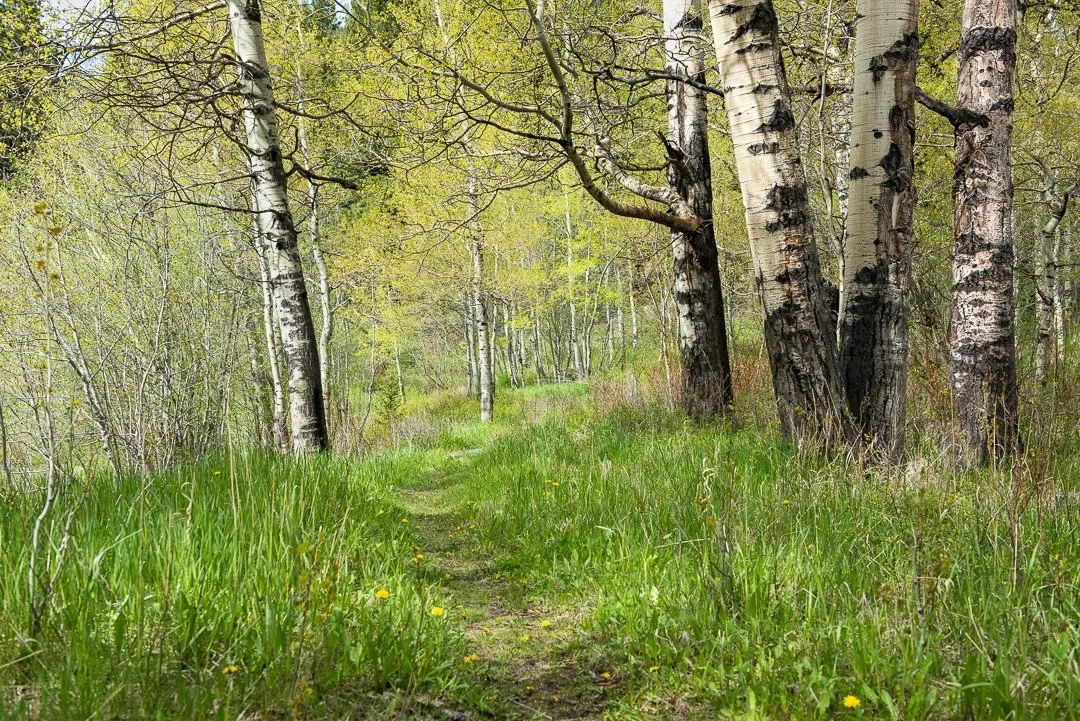
There are marsh grasses that lean and lift with the breeze, docks that extend into the river with a kind of quiet permission, osprey nests balanced on channel markers, and the occasional heron standing in patient stillness as if it has nowhere else it needs to be. The boundary between land and water is not entirely fixed. It shifts, breathes, negotiates. Which, as it turns out, is exactly what caught my attention.
A guide pointed out the shoreline as we passed. One property after another, each with its own interpretation of what it means to live at the edge of water. Here, a clean stone wall. Very decisive. There, something softer. Grasses, a gradual slope, a bit of what looked, if I am honest, slightly unfinished. As if the shoreline itself had said, let’s not rush this.
He explained the difference. Some people install bulkheads or stone barriers to prevent erosion. Others opt for what is called a living shoreline, native grasses, a gradual transition from land to water, sometimes a bit of structure placed offshore to soften incoming waves. Both approaches are meant to answer the same underlying question:
How do I keep what is mine from being taken?
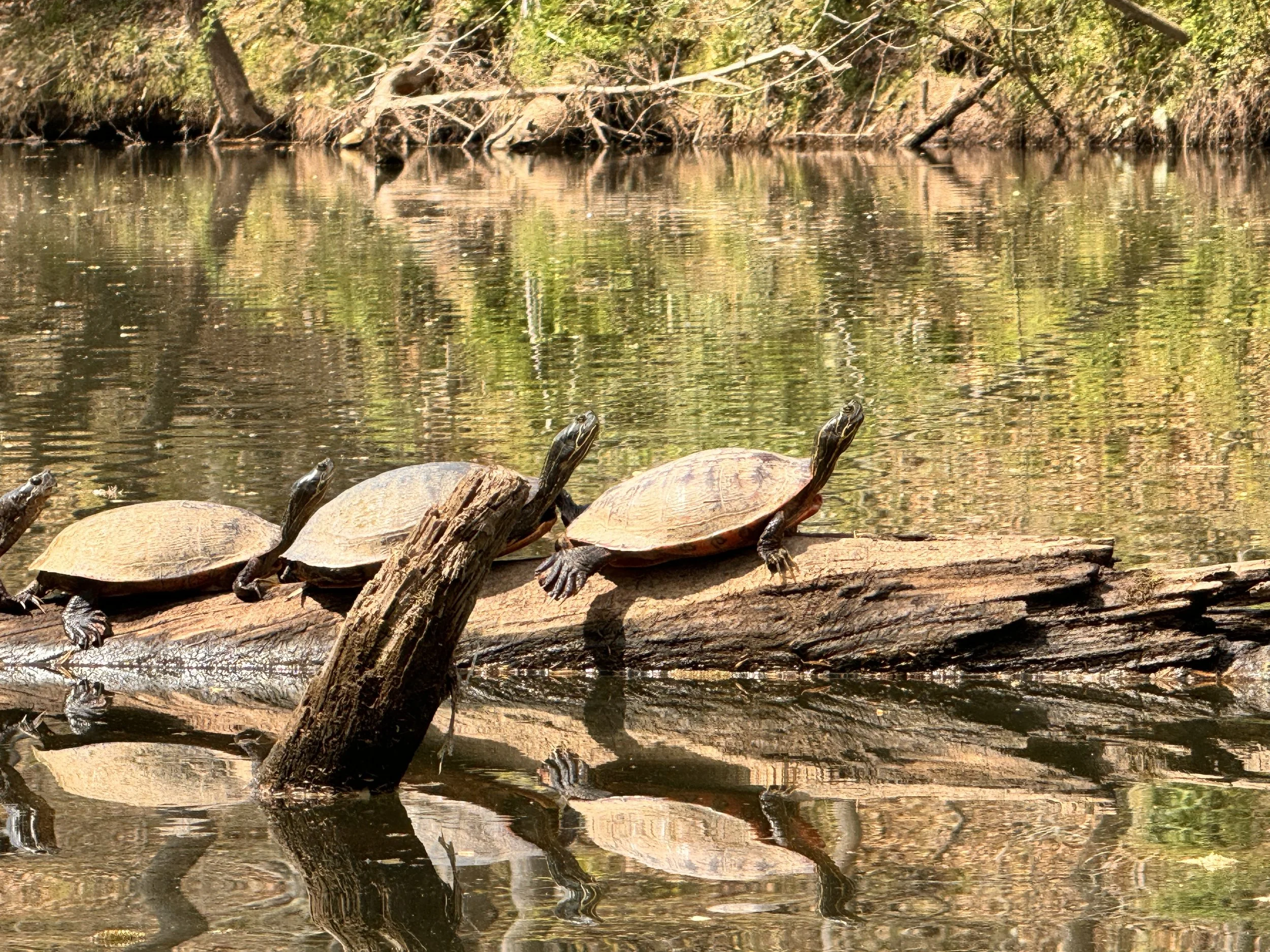
Which is not, if we are honest, a question confined to waterfront property. The part that stayed with me, though, was not the engineering. It was the turtles. Apparently, when you build a vertical wall, certain turtles, like the diamondback terrapin, can no longer climb out of the water to lay their eggs.
No slope, no access. No access, no nesting. No nesting… you can see where all that goes.
It is such a small thing, in a way. A matter of inches. Angle. Texture. And yet, the difference between a wall and a slope becomes the difference between a species continuing its quiet, persistent cycle or not. I wish I could say I took this in as a purely ecological observation and moved on with my day. Instead, it’s following me.
Because of course we build walls. Emotionally. Psychologically. Relationally. We learn, often quite skillfully, how to create edges that hold. We say no more clearly. We stop overextending and we develop discernment. These are not small achievements. Many of us spent years without them. And right now, culturally, there is a lot of conversation about personal boundaries. For good reason. There are many people learning, sometimes for the first time, that they are allowed to have them at all. That they are not required to absorb everything, accommodate everyone, or make themselves endlessly available.
That matters. It matters a lot.
And.
I find myself wondering not just whether we have boundaries, but how those boundaries are shaped. Because there is more than one way to build an edge. A boundary can look like a seawall. Clear. Firm. Non-negotiable. Nothing gets through unless it is explicitly permitted. In certain moments, this is exactly what is needed. There are situations where a clean, unequivocal line is not only appropriate, but kind.
And.
If that becomes the only way we know how to relate, something else can quietly go missing. A living shoreline offers another possibility. It still has an edge. The land does not give itself away. But the boundary is porous in a particular way. Responsive, in relationship, able to absorb and respond rather than only repel. It does not ask us to abandon discernment. It asks us to stay in conversation.
I keep coming back to the turtles. Not because I have suddenly become a spokesperson for coastal reptiles, though I do feel a certain fondness now for their determined, unhurried journeys. But because they represent something so easily overlooked. They need passage. That is it. A way to move between one environment and another. Water to land. Inside to outside. Feeling to expression. Experience to understanding.
When the boundary becomes too absolute, those crossings become difficult, sometimes impossible. There is a version of being human that looks very much like a seawall. Composed. Contained. Highly competent at managing input. Nothing gets in that has not been vetted. Nothing gets out that has not been curated. You can become very good at this. You can also, if you are not careful, become a little cut off from the very aliveness you were trying to protect.
There is another way that is less immediately tidy, and less easily packaged into advice. It looks more like a living shoreline. There is still structure. Still clarity. Still a sense of self that does not collapse with every passing wave. But there is also permeability.
A willingness to feel something before deciding what to do about it. To let an interaction land before categorizing it as acceptable or not. To notice when the reflex to protect has become so quick that it no longer distinguishes between what is actually harmful and what is simply unfamiliar. This is not a clarion call to lower your boundaries but it is an invitation to become curious about their texture. Are they rigid everywhere? Are they responsive anywhere? Do they allow for any crossing at all?
Living shorelines are not neat. They take time, they shift, and they sometimes look like they are not doing enough.
They also support life, allow for movement, and make room for things that do not announce themselves loudly but are, nevertheless, essential.
I don’t have a grand conclusion here. Just a small image that has stayed with me. A turtle, somewhere along a riverbank, making its slow, determined way up a slope that someone chose not to replace with stone. A small, almost invisible decision that made a crossing possible.
We do not only take care of ourselves by holding the line. We also take care of ourselves by shaping edges that allow for the right kinds of movement. Not everything and not indiscriminately. But enough.
And if you find yourself, as I often do, very good at building walls, it might be worth asking, gently: Is there anywhere the edge could soften, just a little? Not to lose yourself. But to allow for the possibility that something, unexpected, unplanned, maybe even quietly necessary, might find its way through.
The turtles, it turns out, do not need much. Just enough of a slope.