

We do not only take care of ourselves by holding the line. We also take care of ourselves by shaping edges that allow for the right kinds of movement. Not everything and not indiscriminately. But enough.
There is a quiet, almost mischievous simplicity running through so many of the great wisdom traditions, whether you wander through the teachings of Buddha or Jesus, sit with Laozi, or read someone like Jon Kabat-Zinn. Different languages, different metaphors, different rituals, and yet they keep pointing, again and again, to something almost embarrassingly straightforward.

Let this be for all of it, the seen, the nearly missed, the already vanishing, for the way meaning gathers not in declaration, but in the pause before we turn away, and the small, saving act of looking again.
Wanting steadiness when we feel unsteady is a very reasonable human impulse. But it is worth noticing when that reaching becomes leaning, and when that leaning quietly redistributes authority. Sometimes the signal is obvious. More often, it isn’t.

Our nervous systems are regularly asked to metabolize global crises, geopolitical analysis, moral outrage, economic speculation, and the opinions of several thousand strangers before breakfast. The human nervous system, it turns out, was not originally designed to function as a breaking news ticker.
Fear travels quickly and certainty spreads faster than nuance. The loudest voices are often the ones most rewarded.

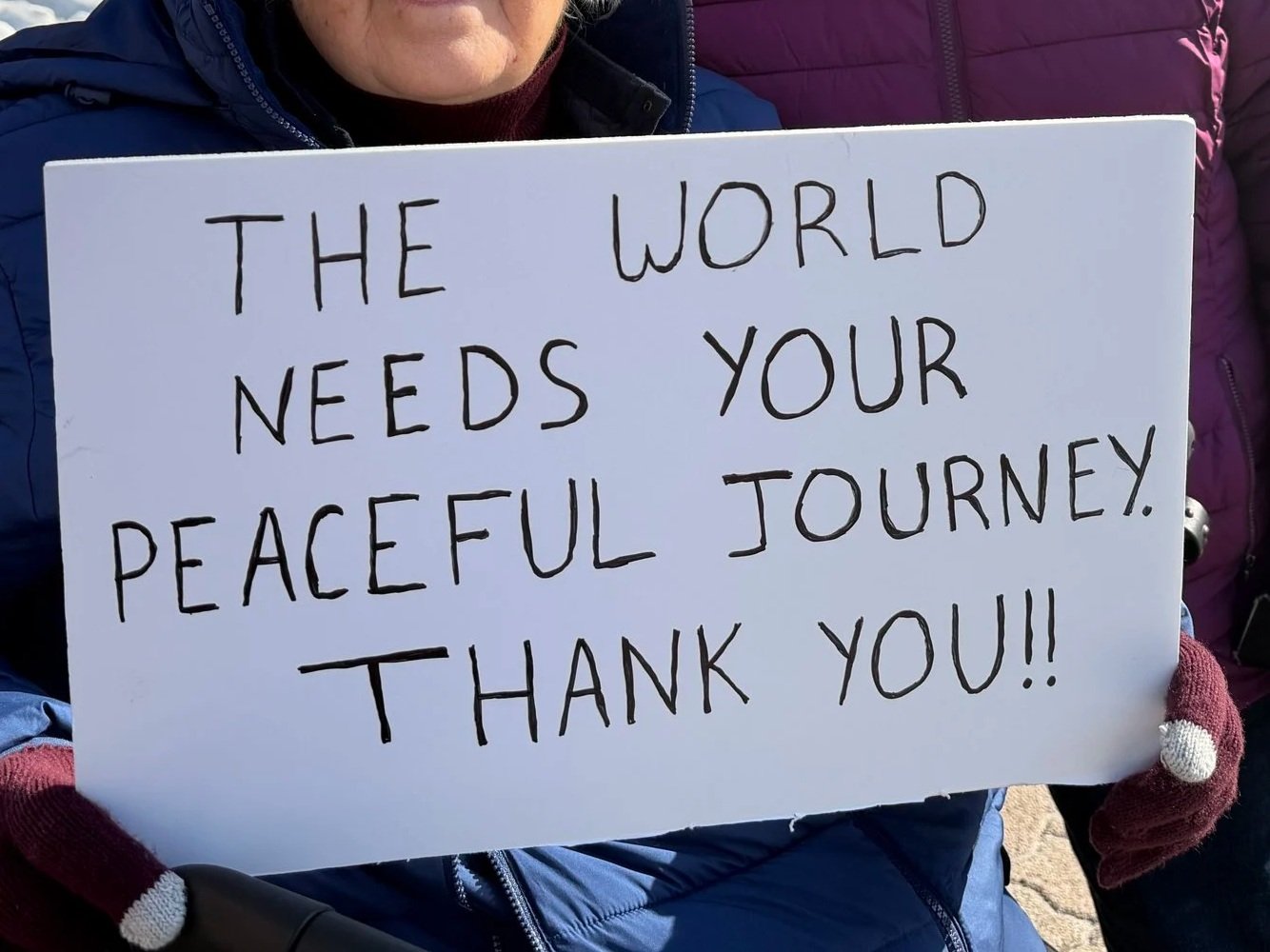
Watching the Walk For Peace monks was witnessing something that exists outside the usual accounting systems of success. No preaching or recruiting, no insistence that anyone believe anything at all. Just quiet presence. Step after step. Mile after mile. Through cold and rain and snow and ice. A moving invitation rather than an argument.
If you are someone who has ever worried that your life or your creative work is taking “too long,” I have accidentally written something that may comfort you.

There is a small, almost invisible moment each morning when the heart is especially impressionable. Before the armor goes on, the mind tightens around the day’s responsibilities, and before the world rushes in. What we place in that moment matters.
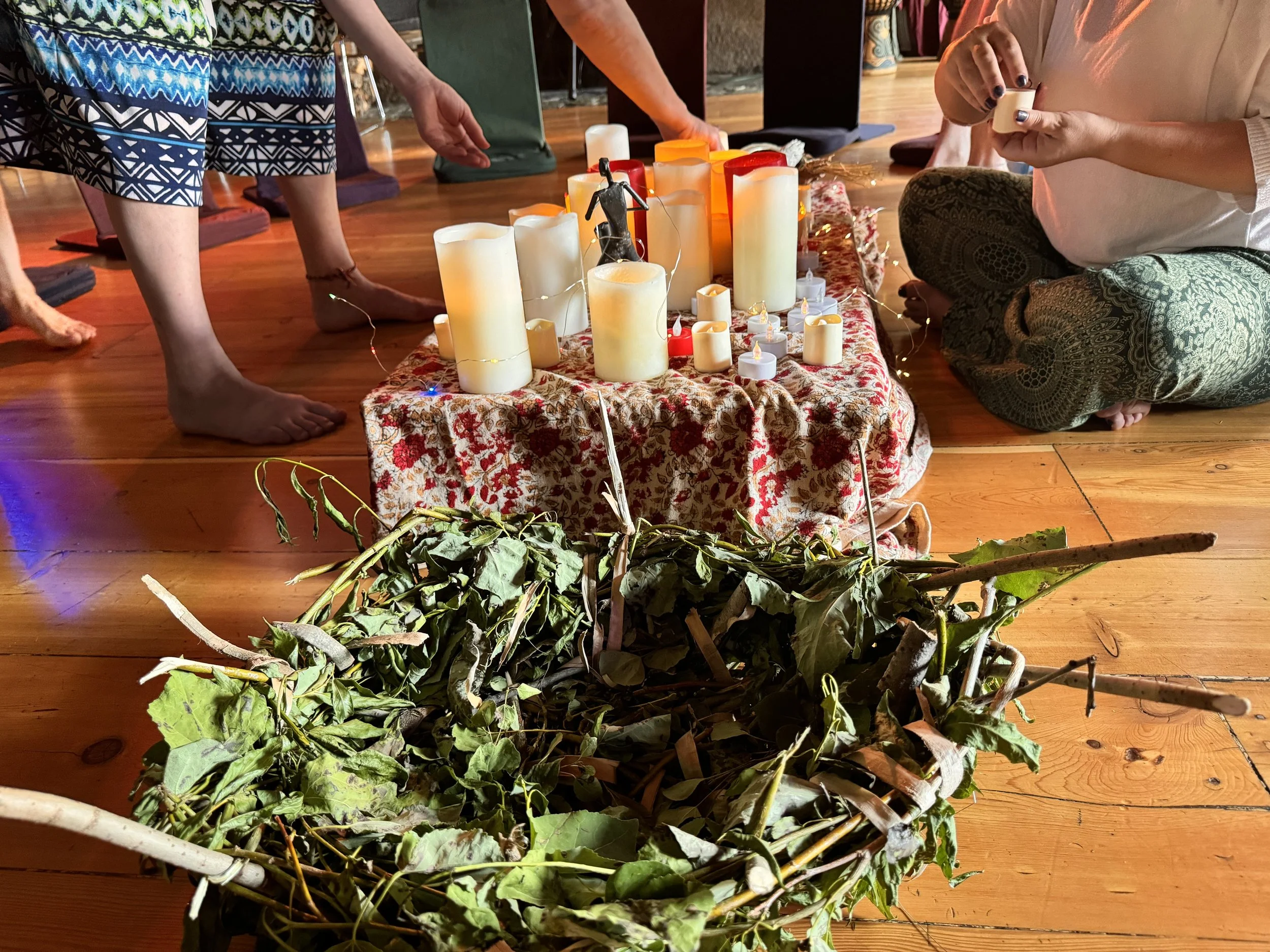
We live in a culture that’s very good at celebrating outcomes and very bad at recognizing presence. We’re trained to look for proof of worth in accumulation, advancement, and visible success. But some of the most essential contributions in a life—care, listening, attunement, guidance, steadiness—don’t accumulate. They circulate.
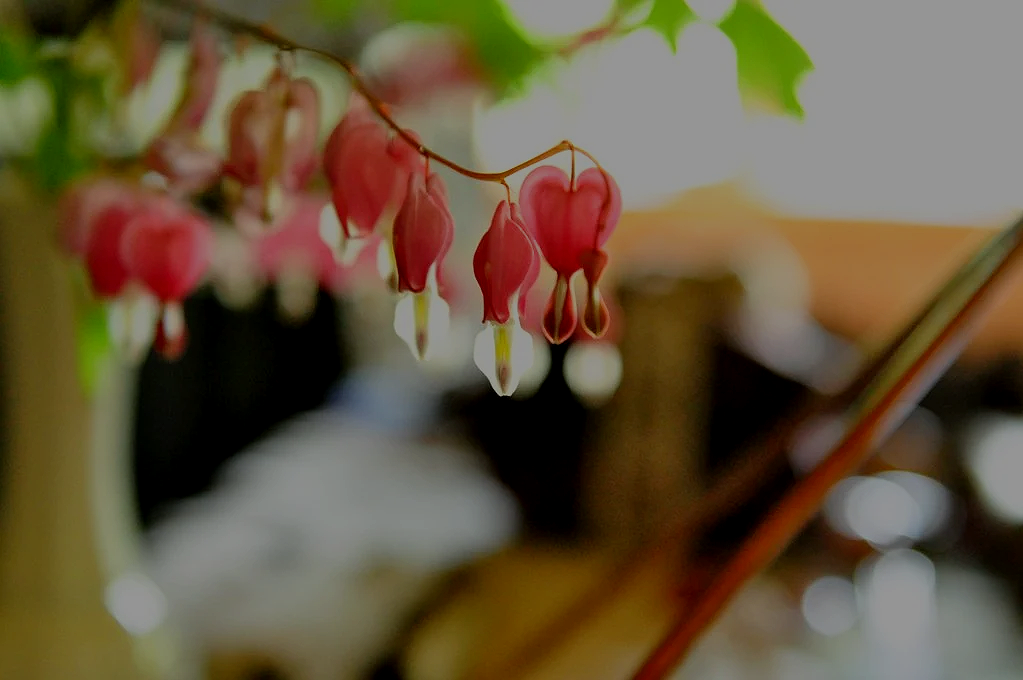
Over time, many people notice that sustained attention—whether through movement, breath, stillness, or honest self-inquiry—softens the urge to judge. It loosens certainty. It creates a little more space between what we see and the stories we tell about it.

The truth of asana is not in the silhouette. It’s in the movement that carries us toward and away from the shape. It’s in the breath that steadies or stutters or the patterns we’ve practiced for years, long before we ever stepped onto a sticky mat.

There’s a funny thing that can happen when life finally offers us a rare bit of breathing room. Retirement, a quieter season, a shift in what tugs at our days. Suddenly there’s space. A clearing. And many of us, raised in the great tradition of noble overextension, react to that clearing with a kind of internal alarm: Quick! Fill it before someone notices!

Different traditions, different languages, same longing: Step away from the noise long enough to remember who you are. Maybe that’s the real connective tissue between contemplative paths

The mind doesn’t need to be silenced, only befriended. Like a clever raccoon, it responds better to gentle redirection than scolding. Give it something real to feel.