Some days lately, staying awake to the world feels like an act of courage.
The news alone can make you want to crawl under something heavy. There is so much suffering to take in, so much uncertainty, so much evidence of our remarkable human capacity both to care for one another and to do terrible things to one another. Add the ordinary freight of a life—people we love getting sick, people dying, bodies changing, disappointments arriving without having been invited—and it can be tempting to pull the covers over our heads.
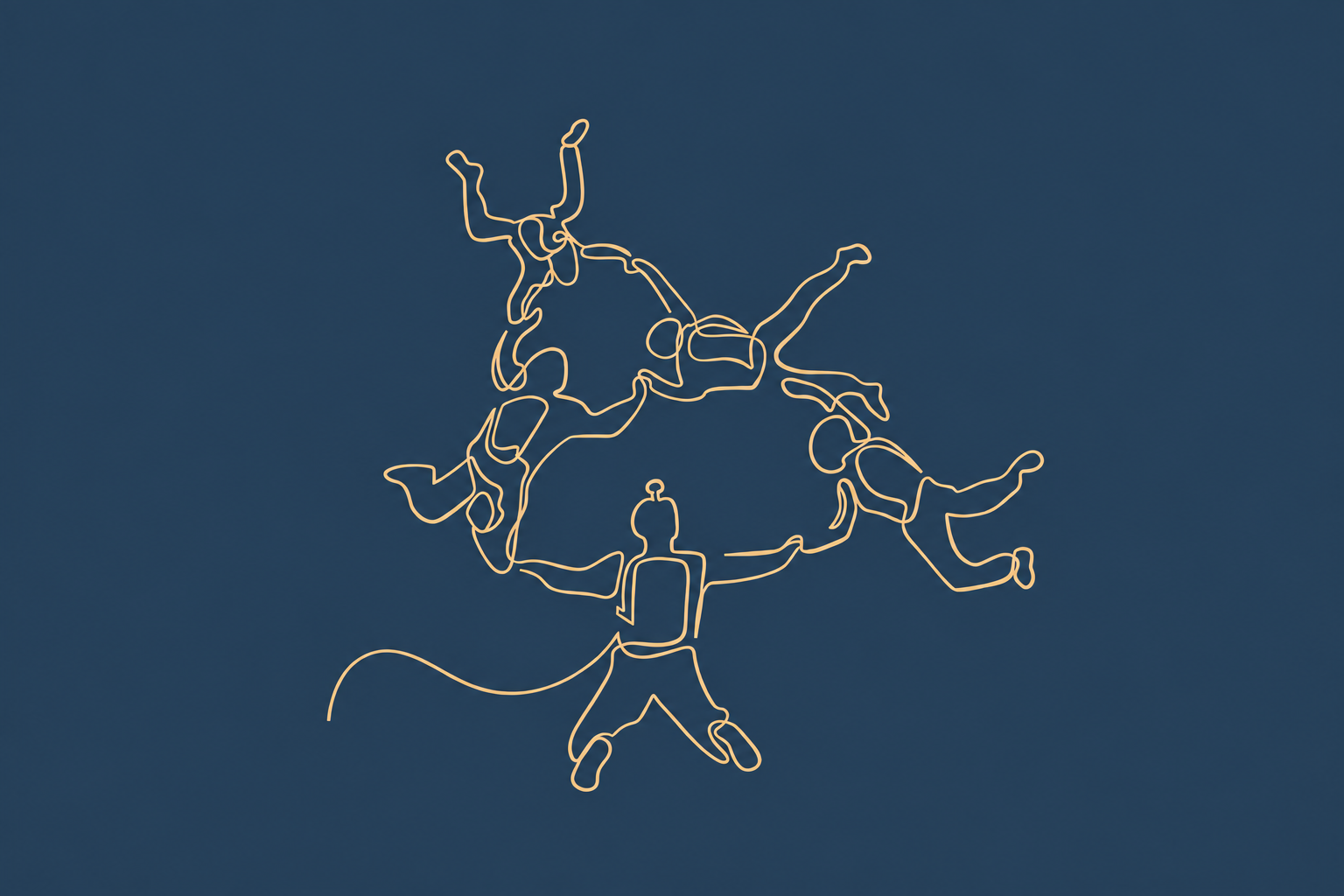
Which has gotten me thinking about rip cords.
Not actual rip cords. I have no plans to jump out of a perfectly good airplane.
I mean the people, places, practices, habits, odd little rituals and reliable pleasures that somehow return us to life when we’ve drifted a little too far from it.
Maybe rip cord is too dramatic. Most of the time there is no emergency, no great plummet from the sky. We become preoccupied or tired or discouraged. Sometimes the sheer volume of what’s happening in the world leaves us overwhelmed by how much we care about and how little of it we can influence. We get hurt. Someone dies. A body we trusted begins behaving differently.
And without quite noticing, we can begin to stand a little outside our own lives.
What brings us back?
What opens
It’s probably different for everyone. A person who can make us laugh when we’ve become far too convinced of the seriousness of everything. A particular patch of forest. Making something with our hands. Music.
A practice that asks us to pay attention to a breath, a foot touching the ground, the astonishing fact of having a body at all. An animal who has absolutely no interest in our existential crisis and would instead like dinner. Now.
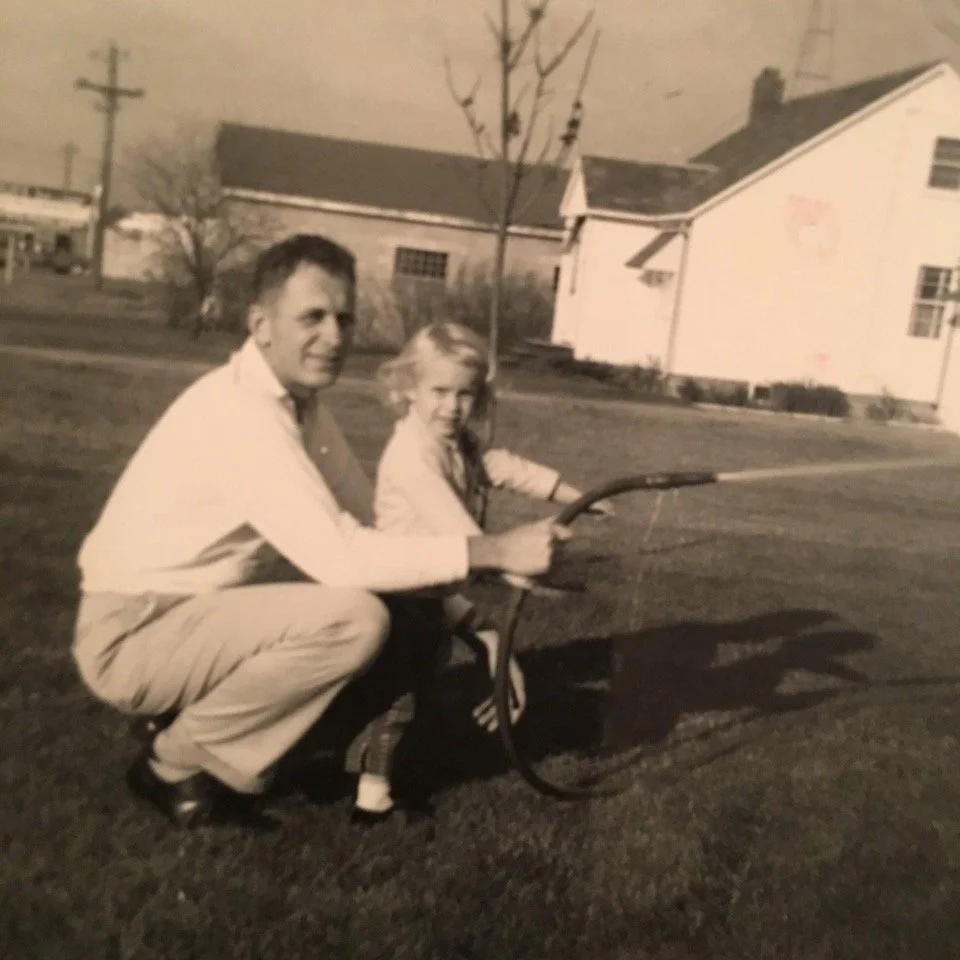
Sometimes it’s a reminder from the past. Recently I watched some videos my brother made of our father nearly twenty years ago—Dad talking about learning to bake in the Army, making music, being his wonderfully animated self. I expected the familiar ache of missing him. That was there. But what struck me more was his appetite for life. Watching him made me remember something beyond the fact that he died: how thoroughly he lived.
Maybe that’s what a rip cord does. It doesn’t necessarily make anything better. It doesn’t erase the loss, heal the wound, fix the world, restore the body or bring anybody back. It simply returns us to the living.
Pulling the cord doesn’t stop the fall. Gravity still gets its say. The ground is still down there, but something opens. The descent changes. There’s air beneath us, something holding us up just enough that we don’t arrive with quite such a spectacular thud.
Maybe the people, places and practices we lean on do something like that. They don’t keep hard things from happening, and they certainly don’t float us serenely above them. They give us a little more room inside the falling. A little more capacity to meet what comes without being flattened by it.
Staying open
Perhaps we need these things because being fully alive turns out to require something more difficult than happiness. It asks us to remain open to delight after disappointment, to risk loving people after we’ve been hurt, to leave a little room for wonder when cynicism would be so much easier—and, maddeningly, can make us feel so much smarter.
It asks us to keep noticing beauty despite knowing perfectly well that none of it lasts.
And it asks something especially difficult when the wound was caused not by chance or mortality, but by another human being.
Which brings me, reluctantly, to forgiveness.
I say reluctantly because forgiveness is one of those lovely words that becomes considerably less lovely when someone has actually done something awful to you. Part of the problem may be what we think the word requires. Forgiveness can sound like acquittal: It wasn’t so bad. You didn’t really hurt me. We’re good.
But what if it doesn’t mean any of those things?
What if forgiveness doesn’t require forgetting, excusing, reconciling or allowing someone back into our lives? What if sometimes it’s simply a decision not to spend the rest of our days carrying what they did everywhere we go?
That’s appealing in theory. In practice, we may set the burden down on Tuesday and discover Thursday morning that we’ve picked the damn thing back up.
Suddenly we’re replaying the conversation in the shower, composing the devastating reply we should have delivered 18 years ago, or feeling the old anger rise with astonishing freshness. And then comes the secondary judgment: Well, apparently I suck at forgiveness.
But maybe forgiveness was never a one-and-done proposition but something we renew. We put down what we’re carrying, discover we’ve picked it up again, and put it down again. Not because the past has changed. Not because the other person deserves absolution. Because we don’t want what happened then to occupy quite so much of what is happening now.
Perhaps forgiveness, too, can be its own kind of rip cord. Not a way of pretending we weren’t pushed but a way of deciding we don’t want the person who pushed us controlling the rest of the fall.
What the scars know
There is a temptation, after we’ve been hurt, to value the scar almost more than what having it taught us. The scar is proof. It says: This happened. I survived this. And there is something honorable in that.
But perhaps eventually the more interesting question becomes: What can I see now that I couldn’t see before?
Grief may be the clearest example. Nobody needs to make a virtue of loss. Some losses are simply terrible, and no amount of lyrical language changes that. But grief can do something strange to attention.
An ordinary voice on an old video becomes almost unbearably precious. We notice the way someone reaches for a coffee cup. A cat asleep in a patch of sunlight. September light coming through a window. Someone we love laughing in the next room.
Not because these things suddenly became sacred. They always were. But for a moment, we noticed. Perhaps that’s what all our various rip cords have in common. They restore attention.
Staying in the world
And maybe that’s especially important when the larger world feels frightening.
Paying attention to what is beautiful isn’t a denial of what is terrible. Laughing with a friend doesn’t mean we’ve stopped caring. Walking in the woods isn’t abandoning the world to its troubles. Making bread or music or dinner for someone isn’t looking away.
Maybe these are some of the ways we remain capable of looking. They remind us that life isn’t waiting somewhere else for us to get through the difficult part.
This is it.
The difficult part is in it. So is the beautiful part. Often they’re sitting right beside each other, apparently having agreed to share a table. Which makes me wonder how many rip cords we have in our lives right now that we barely recognize.
Who are the people after whose company we feel more like ourselves?
Where are the places where something in us unclenches?
What do we do—not because it’s productive, impressive, healthy or good for us, but because while we’re doing it, we are unmistakably here?
What are we carrying that we might put down—even knowing we may have to put it down again tomorrow? And what have we begun taking for granted that has quietly been helping us stay awake?
Maybe the invitation isn’t to go looking for more. Heaven knows we don’t need another self-improvement project. Maybe it’s to notice what’s already here.
The friend or the walk or the music. The practice. The cat. The bread. The willingness to put down an old hurt for the hundred-and-seventh time.
Whatever keeps returning us to this beautiful, bruising, ridiculous business of being alive. Whatever helps something open when we are falling. Because the hard things will keep coming. Gravity, as noted, is annoying in its reliability.
Maybe the question is not how to avoid being hurt, or frightened, or furious, or heartbroken. But it’s how not to let those things take more from us than they already have. How to keep some part of ourselves available for the next patch of sunlight. The next ridiculous laugh. The next person worth loving. The next chance to put down what we’ve picked up again.
Maybe that’s what the rip cords are for. Not to save us from the fall. To keep us from missing the life that’s still happening on the way down.